Ripple Fold vs Pleated Curtains: The Contemporary Choice for Modern Interiors
Ripple Fold or Pleated: Which Style Wins Today?
Interior trends have shifted, and curtain styles have shifted with them. Ripple fold curtains now lead the way in contemporary homes and hospitality spaces. Pleated curtains, however, still hold their ground in classic and formal interiors. So, which one truly suits your space?
Let’s compare both styles closely.
What Makes Ripple Fold Curtains So Popular?
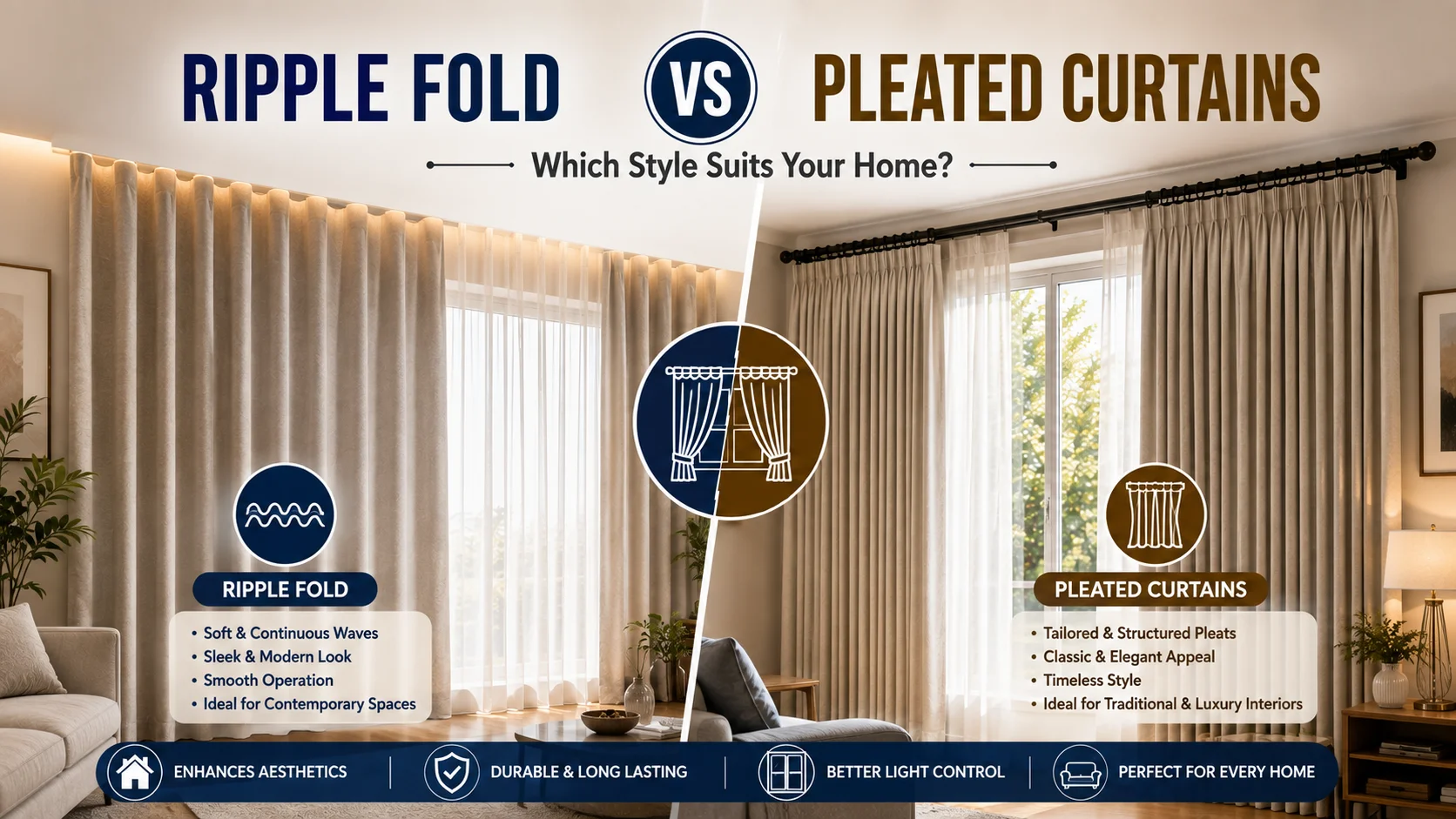
Ripple fold curtains create a soft, continuous S-wave across the entire width of the window. Basically, the fabric flows evenly, without stiff pleats or bulky headers. As a result, the look feels clean, modern, and effortlessly elegant.
Additionally, ripple fold systems glide smoothly along the track. Therefore, opening and closing curtains feels quiet and seamless. Consequently, many hospitality projects now prefer this style for its consistent, uniform finish.
Moreover, ripple fold curtains work beautifully with ELORO’s Nexus track system. So, the folds stay evenly spaced, every single time.
Best suited for: minimalist interiors, hospitality spaces, and homes seeking a soft, modern silhouette.
Why Do Pleated Curtains Still Matter?
Pleated curtains, on the other hand, bring structure and formality to a space. Basically, the fabric is stitched into fixed folds, creating a tailored, traditional look. Thus, pleats suit classic, heritage-style interiors particularly well.
Furthermore, pleated curtains offer a wide range of header styles. For instance, pinch pleats, goblet pleats, and box pleats each add a distinct character. Meanwhile, the fixed structure ensures the curtain holds its shape consistently.
However, pleated headers can appear heavier and more rigid. So, they may not suit ultra-minimalist or contemporary spaces as naturally.
Best suited for: formal interiors, classic homes, and spaces that favour a tailored, structured look.
Ripple Fold vs Pleated: A Quick Comparison
| Factor | Ripple Fold | Pleated |
|---|---|---|
| Visual Style | Soft, continuous wave | Structured, tailored folds |
| Best Fit | Modern, minimalist spaces | Classic, formal interiors |
| Movement | Smooth, uniform glide | Slightly stiffer glide |
| Hospitality Use | Highly preferred | Less common today |
| Maintenance | Simple, even spacing | Requires shape upkeep |
Clearly, both styles serve different design goals. Ultimately, your interior theme should guide the decision.
So, Which Curtain Style Should You Choose?
If your home leans toward clean lines and contemporary design, ripple fold curtains are the natural choice. Alternatively, if you prefer a classic, tailored aesthetic, pleated curtains deliver timeless charm.
Either way, ELORO’s precision-engineered tracks ensure smooth, silent movement, regardless of the style you choose.
Frequently Asked Questions
Are ripple fold curtains suitable for all track types?
Not entirely. Ripple fold curtains work best with compatible profiles, such as ELORO’s Nexus system. Therefore, it’s best to check compatibility first.
Do pleated curtains work with motorised tracks?
Yes, generally. However, heavier pleated headers may require a stronger motorised system for smooth operation.
Which style is better for small windows?
Ripple fold curtains often suit smaller windows well. Because the folds stay compact, the look remains neat and uncluttered.
Is ripple fold more expensive than pleated curtains?
Not necessarily. Costs vary depending on fabric, track system, and finish. Consequently, it’s best to compare options directly.
Ready to Transform Your Windows?
Whether you prefer the soft flow of ripple fold or the tailored elegance of pleats, ELORO brings European-inspired precision to every glide. Explore Our Collection →